Antibacterial Potential of Butterfly pea Flower Kefir Water against Salmonella typhi and Listeria monocytogenes
Abstract
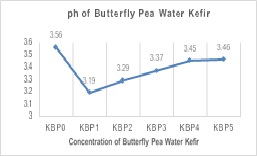
Foodborne diseases remain a major global health concern associated with the occurrence of pathogenic bacteria in food products. Salmonella typhi and Listeria monocytogenes are common causative agents often found in various foods, reducing food safety and quality. Developing functional foods with antimicrobial activity offers a potential strategy to improve both food safety and product value. Kefir water, a probiotic fermented beverage, contains beneficial microorganisms, while butterfly pea flower (Clitoria ternatea) contains abundant bioactive molecules, particularly anthocyanins, that may enhance kefir’s biological activity. This study aimed to evaluate the impact of incorporating butterfly pea powder into kefir on its ability to inhibit S. typhi and L. monocytogenes, as well as its microbiological parameters. Butterfly pea powder was added at concentrations of 1–5%. The antibacterial potential was tested using the Kirby–Bauer disk diffusion technique was employed, whereas pH, LAB, TPC, and yeast populations were statistically examined through Kruskal–Wallis and Mann–Whitney analyses. Findings revealed that kefir water with 2% butterfly pea powder exhibited the highest inhibitory effect against both bacteria. These findings indicate that butterfly pea kefir has potential as a functional food with enhanced antimicrobial activity.
Downloads
References
Aboody, M. S. Al., & Mickymaray, S. (2020). Anti-fungal efficacy and mechanisms of flavonoids. Antibiotics, 9(2),45. https://doi.org/10.3390/antibiotics9020045.
Amaria, W., Sinaga, M. S., Mutaqin, K. H., Supriadi, & Widodo. (2023). Hemolysis and hypersensitive tests ease culture collection management of antagonistic bacteria. J. Trop. Plant Pests Dis. 23(2), 24-30. https://doi.org/10.23960/j.hptt.22324-30.
Aufani, D., Supriyanto, S., Fatayati, I., & Muhammad Ihsan, B. (2023). Identifikasi Bakteri Gram Negatif Pada Air Tebu Di Wilayah Kota Pontianak. Innovative: Journal Of Social Science Research, 3(6), 4572–4579.
Bhandari, J., Pawan, K., Hashmi, M. F., & DeVos, E. (2024). Typhoid Fever. National Library of Medicine. https://www.ncbi.nlm.nih.gov/books/NBK557513/
FoodNet Fast. (2023). Pathogen Surveillance. Centers for Disease Control and Prevention. https://wwwn.cdc.gov/foodnetfast/
Gulhan, A. (2023). Physicochemical, Microbiological, and Sensory Analyses of Functional Detox Juices Fermented with Water-Kefir- Grains. Gıda, 48(4), 715–727. https://doi.org/10.15237/gida.gd23039.
Hamed, H. A., Abbo, M. A. (2023). Method Validation for Detection of Ciprofloxacin Residues in Hospital's Drinking Water in Khartoum State, Sudan. Current Trends Anal Bioanal Chem, 7(1), 195-198. https://doi.org/10.36959/525/454.
Islamy, A., Hermawati, A. H., & Yuliastuti, W. (2025). Comparison of the inhibitory effects of butterfly pea flower (Clitoria ternatea L.) extract and fermented milk probiotics on the growth of Salmonella sp. Edubiotil: Jurnal Pendidikan, Biologi dan Terapan, 10(01), 82-92. https://doi.org/10.33503/ebio.v10i01.795.
Kayode, A. J., & Okoh, A. I. (2022). Antibiotic Resistance Profile of Listeria monocytogenes Recovered from Ready-to-Eat Foods Surveyed in South Africa. Journal of Food Protection, 85(12), 1807–1814. https://doi.org/10.4315/JFP-22-090.
Garrett, D. O., Longley, A. T., Aiemjoy, K., Yousafzai, M. T., Hemlock, C., Yu, A. T., Vaidya, K., Tamrakar, D., Saha, S., Bogoch, I. I., Date, K., Saha, S., Islam, M. S., Sayeed, K. M. I., Bern, C., Shakoor, S., Dehraj, I. F., Mehmood, J., Sajib, M. S. I., Islam, M., & Luby, S. P. (2022). Incidence of typhoid and paratyphoid fever in Bangladesh, Nepal, and Pakistan: results of the Surveillance for Enteric Fever in Asia Project. The Lancet. Global health, 10(7), e978–e988. https://doi.org/10.1016/S2214-109X(22)00119-X.
Marpaung, A. M. (2020). Review of the benefits of butterfly pea flower (Clitoria ternatea L.) for human health. Journal of Functional Food and Nutraceutical, 1(2), 63–85. https://doi.org/10.5851/kosfa.2016.36.6.787.
Muntaha, S. T., Rakha, A., Rasheed, H., Fatima, I., Butt, M. S., Abdi, G. R., & Aadil, R. M. (2025). Polyphenol- protein particles: A nutraceutical breakthrough in nutrition and food science. Journal of Agriculture and Food Research, 19, 101641. https://doi.org/10.1016/j.jafr.2025.101641.
Mus, R., Sulfiani, S., Abbas, M., Asni, A., Asmin, E., Tamalsir, D., & Agustina, T. (2024). Prevalence of Typhoid Fever Cases at the Kampili Community Health Center in Gowa District. Malahayati Health Student Journal, 4(9), 3766–3778. https://doi.org/10.33024/mahesa.v4i9.14959.
Nur’aini, K., Prabaningtyas, S., Febrisiantosa, A., & Trinugraha, A. C. (2024). Evaluation of butterfly pea powder addition to cow’s milk kefir on the antibacterial activity against bacteria causing foodborne disease. IOP Conference Series: Earth and Environmental Science, 1377(1). https://doi.org/10.1088/1755- 1315/1377/1/012047.
Omura, K., Kaibara, E., Yamaguchi, S., Aoyagi, H., Nishio, M., Tomita, K., & Sawai, J. (2024). Effect of Treatment with Heated Scallop Shell Powder on the Inactivation of Naturally Existing Bacteria and Listeria monocytogenes Inoculated on Chicken Meat. Foods, 13, 370. https://doi.org/10.3390/foods13030370.
Panera-Martínez, S., Capita, R., Pedriza-González, Á., Díez-Moura, M., Riesco-Peláez, F., & Alonso-Calleja, C. (2024). Occurrence, Antibiotic Resistance and Biofilm-Forming Ability of Listeria monocytogenes in Chicken Carcasses and Cuts. Foods, 13, 3822. https://doi.org/10.3390/foods13233822.
Pramida, D. P. P. (2023). Identifikasi Bakteri Salmonella typhi pada Makanan Sushi. Jurnal Kesehatan Masyarakat Celebes, 4(1), 1-7.
Putriana, M., Kusuma, M. D. P., Rusmawati, D. A., &Tri, R. (2025). The Effect of Butterfly Pea Flower (Clitoria ternatea L.) Addition on the Chemical, Microbiological, and Sensory Characteristics of Kefir: A Review. Journal of Tropical Animal Science and Feed Technology, 1(2), 19-37. https://dx.doi.org/10.33512/tastech.v1i2.36540.
Setiarto, R. H. B. (2020). The Concept of HAACP, Safety, Hygiene, and Sanitation in the Food Industry. Guepedia from https://books.google.co.id/books?id=mRJOEAAAQBAJ&printsec=copyright&hl=id#v=onepage&q&f=false.
Setiawan, R. A., Wulandari, E., & Pratama, A. (2024). The Effect of Adding Butterfly Pea Flower (Clitoria ternatea) on pH, Total Lactic Acid Bacteria, Total Yeast, and Antibacterial Properties of Kefir Mask. The Effect of Adding Butterfly Pea Flower, 2(7), 695–702. https://doi.org/10.5281/zenodo.13117934.
Setyawardani, T., Sumarmono, J., Rahardjo, A. H. D., Santosa, S. S. & Arkan, N. D. (2025). Quality change of goat milk kefir with the addition of butterfly pea flower powder when stored in low temperatures. Food Research, 9(4), 82-89. https://doi.org/10.26656/fr.2017.9(4).087.
Sindi, A., Badsha, M. B., Nielsen, B., & Ünlü, G. (2020). Antimicrobial activity of six international artisanal kefirs against Bacillus cereus, Listeria monocytogenes, Salmonella enterica serovar enteritidis, and Staphylococcus aureus. Microorganisms, 8(6), 849. https://doi.org/10.3390/microorganisms8060849.
Sionek, B., Szydłowska, A., Trzaskowska, M., &Kołozyn-Krajewska, D. (2024). The Impact of Physicochemical Conditions on Lactic Acid Bacteria Survival in Food Products. Fermentation, 10, 298. https://doi.org/10.3390/fermentation10060298.
Subianto, R. P., Khoswanto, C., & Kriswandini, I. L. (2023). Antibacterial potential of butterfly Pea (Clitoria ternatea) towards Aggregatibacter actinomycetemcomitans in vitro. World Journal of Advanced Research and Reviews, 17(1), 868-876. https://doi.org/10.30574/wjarr.2023.17.1.0106.
Tampubolon, N. A., Mathilda, F., & Naully, P. G. (2024). Penyuluhan Perilaku Hidup Bersih dan Sehat Serta Pemeriksaan DemamTifoid Pada Siswa-Siswi di SMP Bimasena Kabupaten Bandung. Jurnal Altifani Penelitian dan Pengabdian Masyarakat, 4(5), 353-358. https://doi.org/10.59395/altifani.v4i5.565.
Rifqi, M. (2021). Ekstraksi antosianin pada bunga telang (Clitoria ternatea L): Sebuah Ulasan. Pasundan Food Technology Journal, 8(2), 45-50. https://doi.org/10.23969/pftj.v8i2.4049.
Rippa, A., Bilei, S., Peruzy, M. F., Marrocco, M. G., Leggeri, P., Bossù, T., & Murru, N. (2024). Antimicrobial Resistance of Listeria monocytogenes Strains Isolated in Food and Food-Processing Environments in Italy. Antibiotics, 13(6), 525.https://doi.org/10.3390/antibiotics.
Rezaldi, F., Rusmana, R., Susiyanti, S., Maharani, M., Hayani, R. A., Firmansyah, F., & Mubarok, S. (2023). Biotechnology of Kombucha Bunga Telang as a Formulation and Spray Preparation in Inhibiting the Growth of Fusarium solani Fungi, the Cause of Disease in Horticultural Commodity Crops. Journal Bios Logos, 13(3),254–265. https://doi.org/10.35799/jbl.v13i3.52017.
Rumidatul, A., Rahmawati, N., & Sunarya, S. (2021). Production of secondary metabolites and its antibacterial and antioxidant activity during the growth period of endophytic fungi isolated from gall rust sengon plants. Pharmacognosy Journal, 13(2), 325–331. https://doi.org/10.5530/pj.2021.13.4.
World Health Organization. (2023). Suspected triple outbreak of typhoid fever, shigellosis and cholrea-Congo. WHO. https://www.who.int/emergencies/disease-outbreak-news/item/2023-DON488
World Health Organization. (2024). Foodborne Diseases Estimates. WHO. https://www.who.int/data/gho/data/themes/who-estimates-of-the-global-burden-of-foodborne-diseases.
Yennie, Y., Gunawan, G., & Ariyani, F. (2021). Prevalence and Level of Listeria monocytogenes Contamination in Ponds and Processing Units of Vaname Shrimp (Litopenaeus vannamei) for the Export Market. Journal of Post-Harvest and Marine Biotechnology and Fisheries, 16(2), 83.https://doi.org/10.15578/jpbkp.v16i2.702.
Yuniati, Y., Handarini, K., & Mahfud. (2024). Pigment Extraction Method for Anthocyanin Natural Resources in Indonesia: A Review. ASEAN Journal of Chemical Engineering, 24(1), 65-78. https://doi.org/10.22146/ajche.12097.
Yusof, N. Y., Norazzman, N. I. I., Zaidi, N. F. M., Azlan, M. M., Ghazali, B., Najib,M. A., Malik, A. H. A., Halim, M. A. H. A., Sanusi, M. N. S. M., Zainal, A. A.,& Aziah, I. (2022). Prevalence of Antimicrobial Resistance Genes in Salmonella typhi: A Systematic Review and Meta- Analysis. Tropical Medicine and Infectious Disease, 7(10). https://doi.org/10.3390/tropicalmed710027.
Copyright (c) 2026 Annisa Gitta Rizky, Feldha Fadhilah, Alfi Rumidatul, Nindya Sekar Mayuri

This work is licensed under a Creative Commons Attribution-NonCommercial-ShareAlike 4.0 International License.
Authors who publish with BIOEDUPAT: Pattimura Journal of Biology and Learning agree to the following terms:
- Authors retain copyright and grant the journal right of first publication with the work simultaneously licensed under a Creative Commons Attribution License (CC BY-NC-SA 4.0) that allows others to share the work with an acknowledgment of the work's authorship and initial publication in this journal.
- Authors are able to enter into separate, additional contractual arrangements for the non-exclusive distribution of the journal's published version of the work (e.g., post it to an institutional repository or publish it in a book), with an acknowledgment of its initial publication in this journal.
- Authors are permitted and encouraged to post their work online (e.g., in institutional repositories or on their website) prior to and during the submission process, as it can lead to productive exchanges, as well as earlier and greater citation of published work.














 This work is licensed under a