Bioethanol based on Aquatic Biomass (Ipomoea Aquatica) as a Renewable Energy Solution to Achieve the 2030 SDGs
Abstract
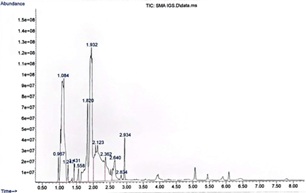
Indonesia has a constantly increasing energy demand. One energy source similar to fossil fuels is biomass. Biomass is organic material derived from living organisms. Indonesia has a constantly increasing energy demand. One energy source similar to fossil fuels is biomass. Biomass is organic material derived from living organisms. Water spinach (Ipomoea aquatica) contains cellulose fibers, which can be broken down into glucose through fermentation with yeast (Saccharomyces cerevisiae), then converted into bioethanol. This study used an experimental method involving a fermentation process carried out over 3, 4, 5, 7, and 10 days. The bioethanol content produced from the distillation process was analyzed using a pycnometer and Gas Chromatography (GC). The highest bioethanol content was obtained in a 5-day fermentation process and a yeast mass of 7 grams, namely 28%. This result is not much different from the GC analysis result of 28.52%. Statistical analysis using ANOVA yielded a p-value of 0.021 (< 0.05), indicating that fermentation time and yeast dosage significantly influenced bioethanol content. The results of this study show that water spinach has the potential to be used for bioethanol production. This supports the goals of the 2030 SDGs, especially points 7, 8, 12, 13, and 15.
Downloads
Copyright (c) 2026 Arini Sucia, Raphael Yori Sutjipto, Farrel Fernando Kwok

This work is licensed under a Creative Commons Attribution-NonCommercial-NoDerivatives 4.0 International License.
Authors who publish with this journal agree to the following terms:
- Copyright on any article is retained by the author(s).
- The author grants the journal, the right of first publication with the work simultaneously licensed under a Creative Commons Attribution License that allows others to share the work with an acknowledgment of the work’s authorship and initial publication in this journal.
- Authors are able to enter into separate, additional contractual arrangements for the non-exclusive distribution of the journal’s published version of the work (e.g., post it to an institutional repository or publish it in a book), with an acknowledgment of its initial publication in this journal.
- Authors are permitted and encouraged to post their work online (e.g., in institutional repositories or on their website) prior to and during the submission process, as it can lead to productive exchanges, as well as earlier and greater citation of published work.
- The article and any associated published material is distributed under the Creative Commons Attribution-NonCommercial-NoDerivatives 4.0 International License.




_copy1.png)