Simultaneous Saccharification and Fermentation of Sugarcane Bagasse by Saccharomyces Cerevisiae and Zymomonas Mobilis
Abstract
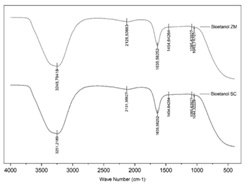
Sugarcane bagasse represents a promising lignocellulosic feedstock for second-generation bioethanol production. This study evaluated the performance of immobilized Simultaneous Saccharification and Fermentation (SSF) systems using Saccharomyces cerevisiae and Zymomonas mobilis for ethanol production from alkali-pretreated sugarcane bagasse. Delignification using 10% NaOH enhanced cellulose accessibility for enzymatic hydrolysis by immobilized Aspergillus niger. SSF was conducted under anaerobic conditions at 30°C for 80 h. Reducing sugar dynamics, physicochemical properties, FTIR spectra, and GC analysis were used to evaluate ethanol formation and quality. The SSF system employing S. cerevisiae produced a higher ethanol concentration (2.83% v/v) and purity (99.77%) compared to Z. mobilis (2.20% v/v; 89.92%). Although higher residual reducing sugars were observed in the Z. mobilis system, ethanol conversion efficiency remained lower, indicating metabolic limitations under SSF conditions. FTIR and GC analyses confirmed ethanol formation with high water content in both distillates. These results demonstrate that microbial robustness plays a critical role in immobilized SSF performance, with S. cerevisiae exhibiting superior fermentative stability and ethanol yield compared to Z. mobilis.
Downloads
Copyright (c) 2026 Elfrida Ginting, Ecclesia Siregar, Ratna Sari Dewi, Lisnawaty Simatupang, Marnida Yusfiani, Jhony Hartanta Sembiring

This work is licensed under a Creative Commons Attribution-NonCommercial-NoDerivatives 4.0 International License.
Authors who publish with this journal agree to the following terms:
- Copyright on any article is retained by the author(s).
- The author grants the journal, the right of first publication with the work simultaneously licensed under a Creative Commons Attribution License that allows others to share the work with an acknowledgment of the work’s authorship and initial publication in this journal.
- Authors are able to enter into separate, additional contractual arrangements for the non-exclusive distribution of the journal’s published version of the work (e.g., post it to an institutional repository or publish it in a book), with an acknowledgment of its initial publication in this journal.
- Authors are permitted and encouraged to post their work online (e.g., in institutional repositories or on their website) prior to and during the submission process, as it can lead to productive exchanges, as well as earlier and greater citation of published work.
- The article and any associated published material is distributed under the Creative Commons Attribution-NonCommercial-NoDerivatives 4.0 International License.




_copy1.png)