INVENTARISASI TANAMAN BUAH DAN SAYUR SEBAGAI SUMBER PANGAN DI PEKARANGAN RUMAH DESA SURANADI, KECAMATAN NARMADA, KABUPATEN LOMBOK BARAT
Abstract
Background: Cultivation of homestead plants such as fruit and vegetables can form an area rich in nutritious food sources that are produced by themselves from the home yards, one of which is in the residential area around the Suranadi Nature Tourism Park (TWA). This study aims to make an inventory of fruit and vegetable plants in the yard based on the knowledge of the people in Suranadi Village.
Methods: The research method was carried out in a descriptive exploratory manner using the method of direct observation to the residents' yards by purposive sampling and semi-structured interviews with the owner of the house (semi structural interview) accidentally.
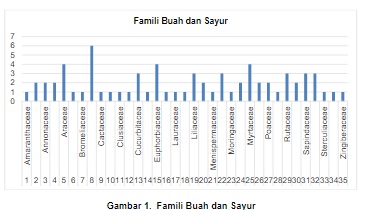
Results: Based on the results of the research that has been carried out, there were 69 types in 35 families that were used as fruit and vegetables (foodstuffs) obtained from 48 sampling plots scattered in the yard of Suranadi Village. The Fabaceae family is the family that has the most types of the first, namely 6 types, while the Euphorbiacea, Araceae, Myrtaceae families with the second most types, each consisting of 4 types and the families of Cucurbitaceae, Liliaceae, Moraceae, Rutaceae, Sapindaceae and the third largest family of Solanaceae that is, each of them consists of 3 types.
Conclusion: There are 69 types of plants in 35 families that are used by the community as fruit and vegetable (foodstuff) plants scattered in the yard in Suranadi Village.
Downloads
Authors who publish with this Journal agree to the following terms:
- Author retain copyright and grant the journal right of first publication with the work simultaneously licensed under a creative commons attribution license that allow others to share the work within an acknowledgement of the work’s authorship and initial publication of this journal.
- Authors are able to enter into separate, additional contractual arrangement for the non-exclusive distribution of the journal’s published version of the work (e.g. acknowledgement of its initial publication in this journal).
- Authors are permitted and encouraged to post their work online (e.g. in institutional repositories or on their websites) prior to and during the submission process, as it can lead to productive exchanges, as well as earlier and greater citation of published works


 2
2