SOSIALISASI PENTINGNYA BUDAYA MENABUNG SEJAK DINI DI KALANGAN PELAJAR DUSUN KUANG MAYUNG
Abstract
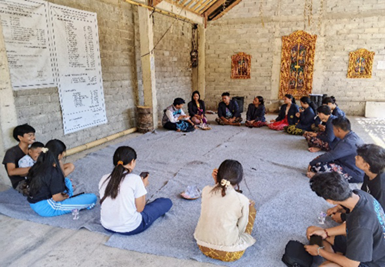
A culture of saving is a positive behavior that is important to instill in children from an early age. In Kuang Mayung Hamlet, high levels of unplanned spending and a lack of understanding of financial management are real problems that need to be addressed. This activity aims to educate students about the importance of a culture of saving as a first step in developing a disciplined, responsible, and independent character in managing their finances. The methods used in this activity included an educational approach through counseling from BRI Bank, interactive discussions, and simple savings practices tailored to the students' age level. The results of this activity showed a 40% increase in students' understanding of the importance of saving after participating in the socialization, as measured by pre- and post-training questionnaires. Evaluation was based on changes in savings attitudes and behavior, as well as participation levels in the activities. It is hoped that by instilling a culture of saving from an early age, students can develop a thrifty mindset, better plan for the future, and avoid unhealthy consumer behavior. Overall, this activity is expected to have a positive impact in supporting the development of healthy financial character among students in Kuang Mayung Hamlet. Instilling the values of saving is very important as part of efforts to create a young generation that is smart and wise in financial management
Downloads
References
Azis, R. A., Anggraeni, R., Khoirunnisa, D., & Anam, M. K. (2023, October). Sosialisasi dan implementasi menabung sejak dini Yayasan Lazuardi Madani. In Prosiding Seminar Nasional Pengabdian Masyarakat LPPM UMJ.
Fadila, F., Amanda, R., Ramadhina, F., Dinata, A., Meiriasari, V., & Ratu, M. K. (2025). Sosialisasi Menabung Sejak Dini di SD Negeri 11 Sembawa. Jurnal Masyarakat Madani Indonesia, 4(4), 906-915.
Fatikasari, N. (2022). SOSIALISASI MENABUNG SEJAK DINI DALAM UPAYA MENINGKATKAN MINAT MENABUNG SISWA KELAS 6 SD NEGERI SENDEN 2. J-ABDI: Jurnal Pengabdian Kepada Masyarakat, 2(2), 3883-3890.
Fauzi, Y. M., Fadhillahanne, F., Kusnadi, R. R., & Huda, M. F. N. (2025). Edukasi Menabung Sejak Dini Kepada Siswa SDN Narawita 01 dan 02. Jurnal AbdiMU (Pengabdian kepada Masyarakat), 5(1), 30-36.
Murtani, A. (2019). Sosialisasi Gerakan Menabung. Seminar Nasional Hasil Pengabdian Kepada Masyarakat 2029, 279–283
Rahmah, A. A., Lestari, B. D., Rahmawati, F. A., Tanjung, G. S., Sukaris, S., Widiharti, W., & Rahim, A. R. (2023). Menabung Sejak Dini: Mengajarkan Generasi Muda Mengelola Uang melalui Sosialisasi Menabung. In Prosiding Seminar Hasil Pengabdian Kepada Masyarakat Dan Kuliah Kerja Nyata (Vol. 1, No. 1, pp. 223-229).
Sabdotomo, A., Munandar, A., Latifah, C., Rohayati, E., Wahyuni, C., Rizki, T., & Maulana, R. (2024). Edukasi Menabung Sejak Dini di Mi Fitrah Insani: Upaya Meningkatkan Kesadaran Finansial Pada Anak Usia Dini. Jurnal Pengabdian Sosial, 1(11), 2032-2037
Salim, A., Andiyana, A., Himmawan, D., & Rusydi, I. (2022). Sosialisasi pentingnya menabung sejak usia dini bagi anak-anak di Desa Kedokangabus Indramayu. Community: Jurnal Hasil Penelitian Dan Pengabdian Masyarakat, 1(1), 24-31.
Wahyuti, S., Nasrun, A., & Zannati, S. L. (2023). Edukasi pentingnya budaya menabung sejak dini untuk bekal masa depan. Jurnal Dharmagama: Jurnal Pengabdian Masyarakat, 1(1), 16-19.
Copyright (c) 2026 PAKEM : Jurnal Pengabdian Kepada Masyarakat

This work is licensed under a Creative Commons Attribution-NonCommercial-ShareAlike 4.0 International License.
Authors who publish with PAKEM: Jurnal Pengabdian Kepada Masyarakat agree to the following terms:
- Authors grant copyright to the journal and right of first publication with the work simultaneously licensed under a Creative Commons Attribution License (CC BY-NC-SA 4.0)
- Authors are able to enter into separate, additional contractual arrangements for the non-exclusive distribution of the journal's published version of the work (e.g., post it to an institutional repository or publish it in a book), with an acknowledgment of its initial publication in this journal.
- Authors are permitted and encouraged to post their work online (e.g., in institutional repositories or on their website) prior to and during the submission process, as it can lead to productive exchanges, as well as earlier and greater citation of published work.
1.png)