INOVASI PANGAN LOKAL BERBASIS SINGKONG: PEMBERDAYAAN MASYARAKAT DESA DI HALMAHERA UTARA
Abstract
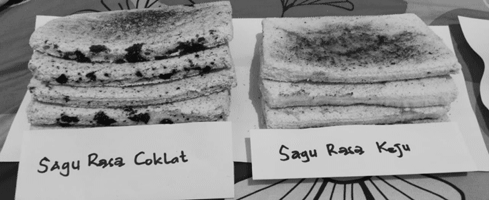
The Community Service Program (PKM) aims to empower the community of Kali Upa Village, North Halmahera, through the diversification of cassava into value-added sagu lempeng products. The main problems faced by the partner community include the low market value of cassava, limited knowledge of processing technology, and weak market access. The implementation methods consisted of socialization activities, product diversification training, provision of simple production equipment, business management assistance, digital marketing training, as well as monitoring and evaluation. The results of the program show an increase in production capacity by up to 40%, a reduction in drying time from two days to approximately 5–6 hours, and product innovation in four flavor variants (original, palm sugar, coconut, and chocolate). The partners have also adopted simple financial record-keeping practices and digital marketing strategies through social media, which have expanded market reach and strengthened product branding. This program has contributed to increased household income, women's empowerment, and the strengthening of local food identity. The PKM model can be replicated in other villages with similar potential in order to enhance family economic resilience, particularly among women household artisans producing sagu lempeng in North Halmahera.
Downloads
Copyright (c) 2026 PAKEM: Jurnal Pengabdian Kepada Masyarakat

This work is licensed under a Creative Commons Attribution-NonCommercial-ShareAlike 4.0 International License.
Authors who publish with PAKEM: Jurnal Pengabdian Kepada Masyarakat agree to the following terms:
- Authors grant copyright to the journal and right of first publication with the work simultaneously licensed under a Creative Commons Attribution License (CC BY-NC-SA 4.0)
- Authors are able to enter into separate, additional contractual arrangements for the non-exclusive distribution of the journal's published version of the work (e.g., post it to an institutional repository or publish it in a book), with an acknowledgment of its initial publication in this journal.
- Authors are permitted and encouraged to post their work online (e.g., in institutional repositories or on their website) prior to and during the submission process, as it can lead to productive exchanges, as well as earlier and greater citation of published work.
1.png)