DESIMINASI TEKNOLOGI SEDERHANA PADA PETANI KOPI UNTUK PENINGKATAN DAN PENGEMBANGAN MUTU OLAHAN BIJI KOPI
Abstract
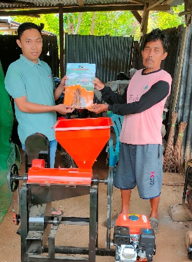
This Community Service Program (PKM) was implemented to address the problems faced by coffee farmer groups in Kamno Sari Village, Jagebob District, Merauke Regency. The area has considerable potential for coffee production; however, it has not been optimally managed due to limited knowledge, processing technology, and marketing systems. Field identification revealed three main problems: low farmer skills in coffee bean processing, production processes that remain traditional and do not meet quality standards, and limited processing facilities and infrastructure, which reduce product competitiveness. In addition, coffee marketing is still confined to the local area and has not yet maximized the use of digital technology. Based on these conditions, this PKM program aimed to disseminate appropriate and easily applicable technologies for farmers, including post-harvest handling techniques, the use of simple but effective processing equipment, and digital packaging and marketing strategies based on social media. The program was implemented using a participatory approach through training activities, equipment demonstrations, and intensive assistance to farmer groups. All members of the farmer group participated actively, and the activities were carried out smoothly according to the planned schedule. The farmers showed particularly high engagement during the simulation of appropriate technology using a coffee bean huller machine. The coffee huller machine provided to the partner group served as a practical tool for post-harvest coffee bean processing. The results of the community service activities indicate an increase in farmers’ knowledge and skills in improving coffee quality. The availability of adequate and functional production facilities also supported higher productivity and improved post-harvest outcomes for the farmer group.
Downloads
References
Anggarini, D. R., Nani, D. A., & Aprianto, W. (2021). Penguatan Kelembagaan dalam Rangka Peningkatan Produktivitas Petani Kopi pada GAPOKTAN Sumber Murni Lampung (SML). Sricommerce: Journal of Sriwijaya Community Services, 2(1), 59–66. https://doi.org/10.29259/jscs.v2i1.59
Choifin, M. C., Lestari, L. P., Sari, R. E., Triyoga, M. D., Madani, M., & Rahmawati, E. P. (2024). Pemberdayaan Petani Kopi Ngembat Lestari melalui Teknologi Pasca Panen dan Strategi Pemasaran Digital. Jurnal Abmas Negeri (JAGRI), 5(2), 247–261. https://doi.org/10.36590/jagri.v5i2.1308
Durand-Bessart, C., Tixier, P., Quinteros, A., Andreotti, F., Rapidel, B., Tauvel, C., & Allinne, C. (2020). Analysis of interactions amongst shade trees, coffee foliar diseases and coffee yield in multistrata agroforestry systems. Crop Protection, 133, 105137. https://doi.org/10.1016/j.cropro.2020.105137
Evizal, R., Hariri, A. M., Sugiatno, S., & Prasmatiwi, F. E. (2021). Pembibitan Kopi Liberika di Desa Puralaksana, Kecamatan Way Tenong, Lampung Barat. Jurnal Sumbangsih, 2(1), 204–211. https://doi.org/10.23960/jsh.v2i1.47
Khoryanton, A., & Sumiyarso, B. (2022). Modifikasi Mesin Pengupas Kulit Biji Kopi Kering Sistem Rotate Peeler untuk Menaikkan Kualitas Produk. Jurnal Rekayasa Mesin, 17(2), 213–222.
Lewaru, T. S., Basuki, F. H., Soepriadi, D. N., Leiwakabessy, T. F. F., Laitupa, M. F., Sitanala, T. F., Temalagi, S., Kriswantini, D., Engko, C., Lenggono, T. O., & Pattinaja, E. M. (2022). PEMBERDAYAAN MASYARAKAT MELALUI EDUKASI LITERASI KEUANGAN KELUARGA DI DESA WAKAL KABUPATEN MALUKU TENGAH. PAKEM : Jurnal Pengabdian Kepada Masyarakat, 2(2), 103–107. https://doi.org/10.30598/pakem.2.2.103-107
Mawardi, I., Nurdin, N., & Zulkarnaini, Z. (2020). INOVASI MESIN-MESIN TEKNOLOGI PASCAPANEN KOPI SEBAGAI PRODUK USAHA INTELEKTUAL KAMPUS POLITEKNIK NEGERI LHOKSEUMAWE. Panrita Abdi - Jurnal Pengabdian pada Masyarakat, 4(1), 24. https://doi.org/10.20956/pa.v4i1.7068
Noor Rizkiyah & Shofiyah Shofiyah. (2021). Strategi Pengembangan Ekonomi Lokal melalui Kawasan Desa Wisata Berbasis Komoditas Unggulan Kopi Liberika (Kba) di Desa Kumpai Batu Atas Kecamatan Arut Selatan Kabupaten Kotawaringin Barat. Mimbar Agribisnis, 7(2), 1572–1584. https://doi.org/10.25157/ma.v7i2.5513
Parjono, P., Murtilaksono, K., Murtilaksono, L., & Anwar, Syaiful. (2019). FRACTIONATION OF IRON (Fe) AND MANGANESE (Mn) IN THE HORIZONS OF A FOREST SOILS, AGROFORESTRY, AND DRYLAND AGRICULTURE. JOURNAL OF ENVIRONMENTAL SCIENCE AND SUSTAINABLE DEVELOPMENT, 2(1). https://doi.org/10.7454/jessd.v2i1.32
Pratama, R. A., & Chotimah, C. (2025). Pendampingan Kelembagaan Petani Kopi pada Gapoktan Kamno Sari Mandiri (KSM) untuk Meningkatkan Produktifitas dan Kualitas Buah Kopi. 2(2).
Rachman, A. F., Suprina, R., Boediman, S. F., & Husen, M. (2024). Pengembangan Coffee Culture Kopi Liberika Cipasung, Desa Wisata Cipasung, Kabupaten Kuningan. 6.
Somarriba, E., Beer, J., & Muschler, R. G. (2001). Research methods for multistrata agroforestry systems with coffee and cacao: Recommendations from two decades of research at CATIE. Agroforestry Systems, 53(2), 195–203. https://doi.org/10.1023/A:1013380605176
Widiastuti, M. M. D., Mangera, Y., Andriyono, A., Jamaludin, J., & Yuniekowati, N. (2020). Peningkatan Kapasitas Kelompok Tani Jaya Makmur Kurik Merauke melalui Pelatihan Pembuatan Asap Cair Sekam Padi sebagai Biopestisida Organik. Agrokreatif: Jurnal Ilmiah Pengabdian kepada Masyarakat, 6(2), 133–142. https://doi.org/10.29244/agrokreatif.6.2.133-142
Copyright (c) 2026 PAKEM: Jurnal Pengabdian Kepada Masyarakat

This work is licensed under a Creative Commons Attribution-NonCommercial-ShareAlike 4.0 International License.
Authors who publish with PAKEM: Jurnal Pengabdian Kepada Masyarakat agree to the following terms:
- Authors grant copyright to the journal and right of first publication with the work simultaneously licensed under a Creative Commons Attribution License (CC BY-NC-SA 4.0)
- Authors are able to enter into separate, additional contractual arrangements for the non-exclusive distribution of the journal's published version of the work (e.g., post it to an institutional repository or publish it in a book), with an acknowledgment of its initial publication in this journal.
- Authors are permitted and encouraged to post their work online (e.g., in institutional repositories or on their website) prior to and during the submission process, as it can lead to productive exchanges, as well as earlier and greater citation of published work.
1.png)