IMPLEMENTASI INOVASI SOSIAL ISLAM BERBASIS EKOLOGIS DAN KOLABORATIF DI DESA CIBADUNG BOGOR
Abstract
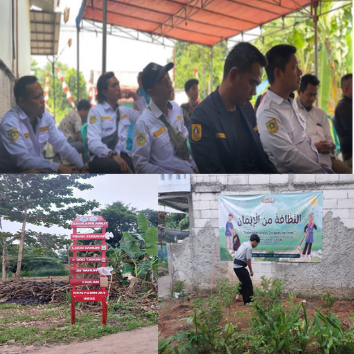
This study aims to explain the ecological-based Islamic social innovation to protect the environment by Community Service Program (KKN) university students during their direct service in the Cibadung, along with a description of the collaborative procurement of collaborative activities between KKN university students and the Cibadung Communities in protecting the environment. In depth, this study elaborates on the environmental protection awareness must be carried out collaboratively, not limited to being assigned to certain groups only. Collaborative efforts that directly involve the community will more easily achieve for the common good in protecting the ecological-based environment with an approach to conveying Islamic values so that they are more easily accepted by the community. The implementation of Islamic social innovation is carried out through the da'wah method carried out directly by the university students with the aim of making the community understand that humans live side by side with nature. In the dynamics of understanding the community is given an understanding of Frugal Living or Zuhud. This lifestyle is part of Islamic values, which can reduce environmental damage. Qualitative research methods are used in this study, using a participatory and constructive approach. Data collection techniques are primary and secondary. Primary sources were obtained directly from the lifestyle and daily activities in the Cibadung, while secondary data were obtained from books and journal articles specifically discussing da'wah, the environment, ecology, and village patterns. The research showed, the collaborative activities by the KKN students with the Cibadung communities went well and received a positive response.
Downloads
References
Abdelzaher, D. M., Kotb, A., & Helfaya, A. (2019). Eco-Islam: Beyond the Principles of Why and What, and Into the Principles of How. Journal of Business Ethics, 155(3), 623–643. https://doi.org/10.1007/s10551-017-3518-2
Abdillah, M. D. (2025). Krisis ekologi di indonesia: Dampak eksploitasi sumber daya alam dan upaya pemanfaatan berkelanjutan. In Maliki Interdisciplinary Journal (MIJ) eISSN (Vol. 3). http://urj.uin-malang.ac.id/index.php/mij/index
Gunadi, A. A., Parlindungan, D. P., Santi, A. U. P., Aswi, & Aburahman, A. (2020). Bahaya Plastik bagi Kesehatan dan Lingkungan. Seminar Nasional Pengabdian Masyarakat LPPM UMJ, 1–7. http://jurnal.umj.ac.id/index.php/semnaskat
Disdukcapil Kabupaten Bogor. (2026, April 12). Profil Desa Cibadung.
Ghaaziy, A., Al Qur’an Dan Tafsir, J. I., Living, F., Perspektif, D., Quran, A., Sederhana, H., & Zuraidah, B. (2025). Frugal Living Dalam Perspektif Al Quran : Hidup Sederhana, Penuh Berkah. 1(3).
Hassan, N. E. (2024). The role of university students in protecting the environment. Indonesian Journal of Applied Environmental Studies, 5(2), 109–117. https://doi.org/10.33751/injast.v5i2.10872
John Creswell, & J David Creswell. (2018). Research_Design. SAGE Publications.
Kementerian Pendidikan, K. R. dan T. (2024). Ragam Kegiatan Kampus Merdeka.
Husein, M. (2021). BUDAYA DAN KARAKTERISTIK MASYARAKAT PEDESAAN. Aceh Anthropological Journal, 5(2), 186–202.
Mokodompit, N. F. (2022). KONSEP DAKWAH ISLAMIYAH. Jurnal Dakwah Dan Komunikasi, 1(2), 112–123.
Nauli, F. A., Rahmadani, A. N., Jakoswa, F. L., Putri, I. H., Anugrah, N., Chilika, N., Putra, M. I., Br. Pasaribu, L. E., Nengsih, Y. G. S., Meinarti, Y., & Fauziah, N. N. (2022). Penanaman dan Manfaat Tanaman Obat Keluarga (TOGA) di Desa Karya Bhakti Kabupaten Kampar. Jurnal Pengabdian Multidisiplin, 3(1), 6–10. https://doi.org/10.51214/japamul.v3i1.364
Qomaria, E. N. (2025). Strategi Frugal Living Dalam Pendidikan Islam Nonformal. Jurnal Studi Kemahasiswaan, 5(1), 31–42. https://doi.org/10.54437/irsyaduna
Rahmasari, H. A. S., Mafruhah, I., Istiqomah, N., & Gravitiani, E. (2025). Frugal Living is A New Alternative Gen Z Lifestyle. Signifikan: Jurnal Ilmu Ekonomi, 14(2). https://doi.org/10.15408/sjie.v14i2.46418
Ruiz-Mallén, I., Satorras, M., March, H., & Baró, F. (2022). Community climate resilience and environmental education: Opportunities and challenges for transformative learning. Environmental Education Research, 28(7), 1088–1107. https://doi.org/10.1080/13504622.2022.2070602
Saputriningsih, C. L. (2021). Pemberdayaan kelompok pembudidaya ikan hias di kawasan Minapolitan Desa Cibadung, Kecamatan Gunung Sindur, Kabupaten Bogor, Jawa Barat. Unri Conference Series: Community Engagement, 3, 506–512. https://doi.org/10.31258/unricsce.3.506-512
UIN Jakarta. (2025a, July 28). Dari Ciputat untuk Dunia, 5.091 Mahasiswa UIN Jakarta Lakukan Pengabdian Masyarakat Hingga ke Mancanegara. UIN Jakarta.
UIN Jakarta. (2025b, July 28). KKN 2025 UIN Jakarta Dorong Inovasi Sosial Islam Berbasis Ekologis dan Kolaboratif. UIN Jakarta.
Vaughn, L. M., & Jacquez, F. (2020). Participatory Research Methods – Choice Points in the Research Process. Journal of Participatory Research Methods, 1(1). https://doi.org/10.35844/001c.13244
Copyright (c) 2026 PAKEM: Jurnal Pengabdian Kepada Masyarakat

This work is licensed under a Creative Commons Attribution-NonCommercial-ShareAlike 4.0 International License.
Authors who publish with PAKEM: Jurnal Pengabdian Kepada Masyarakat agree to the following terms:
- Authors grant copyright to the journal and right of first publication with the work simultaneously licensed under a Creative Commons Attribution License (CC BY-NC-SA 4.0)
- Authors are able to enter into separate, additional contractual arrangements for the non-exclusive distribution of the journal's published version of the work (e.g., post it to an institutional repository or publish it in a book), with an acknowledgment of its initial publication in this journal.
- Authors are permitted and encouraged to post their work online (e.g., in institutional repositories or on their website) prior to and during the submission process, as it can lead to productive exchanges, as well as earlier and greater citation of published work.
1.png)