PENINGKATAN KOMPETENSI GURU DALAM MERANCANG PEMBELAJARAN INOVATIF BERBASIS ETNOPEDAGOGI DAN DEEP LEARNING MELALUI PEMANFAATAN KECERDASAN BUATAN
Abstract
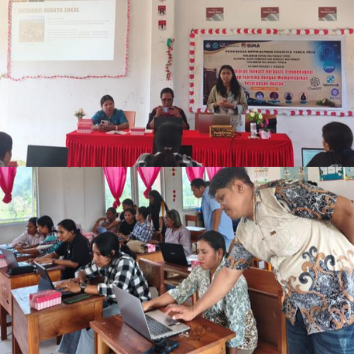
Teachers in Indonesia's disadvantaged, frontier, and outermost (3T) regions continue to face challenges in developing innovative, contextual, and technology-enhanced learning. This community service program aimed to improve teachers' competence in designing ethnopedagogy- and deep learning-based instruction by utilizing artificial intelligence. The program was conducted at SMP Negeri 2 Tiakur, Southwest Maluku Regency, Indonesia, from 11 to 13 June 2026, involving 20 teachers. The implementation consisted of socialization, training, technology application, mentoring and evaluation, and sustainability activities. Program effectiveness was evaluated using a pre-test–post-test design, supported by classroom observations, product assessment, and participant response questionnaires. The results indicated a significant improvement in teachers' competence, as reflected by the increase in the average score from 63 on the pre-test to 92 on the post-test. All participants successfully utilized ChatGPT, Canva, Wordwall, and ZEP Quiz to develop learning materials integrating local culture with deep learning principles. Participants also demonstrated high engagement throughout the training and produced learning devices ready for classroom implementation. Program sustainability was supported through the use of Moodle as a learning management system for sharing instructional resources and best practices. These findings demonstrate that practice-oriented training combined with continuous mentoring effectively enhances teachers' competence in developing innovative, contextual, and technology-supported learning.
Downloads
References
Agustin, I. H., Dafik, Marsidi, Santoso, K. A., & Kusbudiono. (2026). Improving Teachers’ Competence in Designing Contextual STEM-Based Learning Activities through Training and Mentoring. Jurnal Hasil Pengabdian Masyarakat (JURIBMAS), 5(1 SE-Articles), 668–681. https://doi.org/10.62712/juribmas.v5i1.1311
Agyeman, N. Y. B. (2024). Deep learning in high schools: exploring pedagogical approaches for transformative education. Humanika, 24(2), 111–126. https://doi.org/10.21831/hum.v24i2.71350
Citra, C., Karimuddin, K., Nasir, S. H., Roslina, R., & Susi Astianti. (2026). Exploring Teachers’ Digital Readiness in Rural Indonesia. FOSTER: Journal of English Language Teaching, 7(1), 279–289. https://doi.org/10.24256/foster-jelt.v7i1.368
Dahoklory, A. S. K., Sugiarto, S., & Rupilele, K. (2025). Ethnomathematics of small border islands : Geometric concepts in Koli leaf weaving on Letti Island. Indonesian Journal of Science and Mathematics Education, 08(3), 731–744. https://doi.org/10.24042/ijsme.v8i3.28907
Hikmah Syafiulia, S., Mahendra Wasita Aji, S., & Salsabiltisa De Side, J. (2025). Integrating indigenous learning through an ethnopedagogical perspective in elementary schools: A systematic literature review. EduStream: Jurnal Pendidikan Dasar, 9(1 SE-Articles), 27–36. https://doi.org/10.26740/eds.v9n1.p27-36
Inuhan, M., Dahoklory, A. S. K., Lekitoo, J. N., Rupilele, K., MA, R. K., Sugiarto, S., Kurniawan, C. D., Huda, M. M., Practice, B., Min, D. P. R. A., Kanan, W. A. Y., Narassati, N. A., Saleh, R., Arthur, R., Lekitoo, J. N., Sugiarto, S., Dahoklory, A. S. K., Malwewan, A., Oktavianti, I., … Supriyanto, S. (2023). Pelatihan Media Pembelajaran Matematika Berbasis Etnomatematika Berbantuan Software GeoGebra Di Kecamatan Pulau Lakor. PAKEM : Jurnal Pengabdian Kepada Masyarakat, 3(2), 179–183. https://doi.org/10.30598/pakem.3.2.179-183
Nisa, N., Wabiser, Y. D., & Amsad, L. N. (2026). Tantangan Pemerataan Pendidikan di Wilayah 3T Indonesia. Pendas : Jurnal Ilmiah Pendidikan Dasar, 11(01), 450–456. https://doi.org/https://doi.org/10.23969/jp.v11i01.38730
Nurhasanah, S., Sutiana, D., Nabil, F., Fauji, I., Hendriyan, S., & Dian, D. (2025). Bridging the Gap: A Systematic Review of Deep Learning Pedagogy for Indonesia’s Curriculum Reform. Tarbawi: Jurnal Keilmuan Manajemen Pendidikan, 11(02), 277–292. https://doi.org/10.32678/tarbawi.v11i02.11368
Putri, S. A., Farisia, H., & Wirya, D. Y. (2025). Implementation of Ethnopedagogy-Based Learning At Elementary School: Case Study of Kuala Lumpur Indonesia School Grade 2. Jurnal Tatsqif: Jurnal Pemikiran Dan Penelitian Pendidikan, 23(1), 2025. https://doi.org/https://doi.org/10.20414/jtq.v23i1.13762
Reni Faridah, Marini, A., & Zakiah, L. (2024). Ethnopedagogical Approach In Primary Education: Enhancing Engagement, Cultural Identity, And Character Development. Jurnal Pendidikan Administrasi Perkantoran (JPAP), 12(3), 380–390. https://doi.org/https://doi.org/10.26740/jpap.v12n3.p380-390
Rochmah, N., & Alifiani, A. (2026). Deep Learning Pedagogy dalam Perspektif Konstruktivisme: Systematic Literature Review terhadap Pemahaman Konseptual. Mandalika Mathematics and Educations Journal, 8(1), 71–84. https://doi.org/10.29303/jm.v8i1.11332
Rofiah, N. H., Restiana, R., & Dewi, R. (2024). Promoting Digital Literacy: Assessing Teachers Readiness in Utilizing Information and Communication Technology for Learning in Rural Area. Jurnal Prima Edukasia, 12(1), 41–51. https://doi.org/10.21831/jpe.v12i1.63968
Rumtutuly, F., MA, R. K., Lekitoo, J. N., Lestari, Dolewikou, R., Dolaitery, D. A., Kwuwulay, H., Sairtory, D., & Miru, J. (2025). Mentoring Development of AI-assisted Ethnoscience-Based Students Worksheet for Independent Learning. Dinamisia: Jurnal Pengabdian Kepada Masyarakat, 9(4), 1161–1175. https://doi.org/https://doi.org/10.31849/dinamisia.v9i4.23916
Rumtutuly, F., Sugiarto, S., Johansz, D., Wakole, T., Mose, W. Y., Rumlawang, P. A., & Suherman, D. R. (2026). Pelatihan Penyusunan Perangkat Pembelajaran Berbasis Etnopedagogi dan Deep Learning Berbantuan Teknologi Bagi Guru Pulau-Pulau Kecil Perbatasan. Jurnal Masyarakat Madani Indonesia, 5(1), 17–26. https://doi.org/https://doi.org/10.59025/ktqb8f40
Sugiarto, S., Rupilele, K., MA, R. K., Lekitoo, J. N., Inuhan, M., & Dahoklory, A. S. K. (2024). Ethnomathematics of Small Border Islands: Lutur Batu on Moa Island. BAREKENG: Jurnal Ilmu Matematika Dan Terapan, 18(1), 0475–0482. https://doi.org/10.30598/barekengvol18iss1pp0475-0482
Sugiarto, S., Souhoka, R., Wattimury, I., Kilikily, C. C., Umarella, M. I. S., Sairiltiata, S., Rumtutuly, F., & Johansz, D. (2025). Pelatihan Pemanfaatan Quizizz dan Kahoot ! dalam Rangka Peningkatan Literasi Digital Guru pada Evaluasi Pembelajaran Interaktif. Jurnal Masyarakat Madani Indonesia, 4(4), 900–905. https://doi.org/https://doi.org/10.59025/exk4dz55
Uswatun, Milandari, B. D., Bilal, A. I., Garba, M. M., & Hafeez, M. (2026). The effectiveness of ethnopedagogy in revitalising local wisdom in formal education: A phenomenological review. Indonesian Journal of Educational Development (IJED), 6(4), 1260–1274. https://doi.org/10.59672/ijed.v6i4.5742
Wattimury, I., Souhoka, R., Umarella, M. I. S., Kilikily, C. C., & Sugiarto, S. (2026). Pelatihan Pengembangan Media Pembelajaran Inovatif Berbasis Canva dan Gamma AI bagi Guru SD Pulau-pulau Kecil Perbatasan. Jurnal Masyarakat Madani Indonesia, 5(1), 686–692. https://doi.org/https://doi.org/10.59025/87jq2c45
Wicaksono, B. K., Harris, T., & Suyitno. (2026). The Implementation of Teacher Training Programs to Enhance Pedagogical Competence in Elementary Schools. TOFEDU: The Future of Education Journal, 5(1), 901–904. https://doi.org/https://doi.org/10.61445/tofedu.v5i1.1586
Copyright (c) 2026 PAKEM: Jurnal Pengabdian Kepada Masyarakat

This work is licensed under a Creative Commons Attribution-NonCommercial-ShareAlike 4.0 International License.
Authors who publish with PAKEM: Jurnal Pengabdian Kepada Masyarakat agree to the following terms:
- Authors grant copyright to the journal and right of first publication with the work simultaneously licensed under a Creative Commons Attribution License (CC BY-NC-SA 4.0)
- Authors are able to enter into separate, additional contractual arrangements for the non-exclusive distribution of the journal's published version of the work (e.g., post it to an institutional repository or publish it in a book), with an acknowledgment of its initial publication in this journal.
- Authors are permitted and encouraged to post their work online (e.g., in institutional repositories or on their website) prior to and during the submission process, as it can lead to productive exchanges, as well as earlier and greater citation of published work.
1.png)