Analysis of Students' Mathematical Connection Skills in Solving High-Order Thinking Skills Problems if Flat- Sided Space Building
Abstract
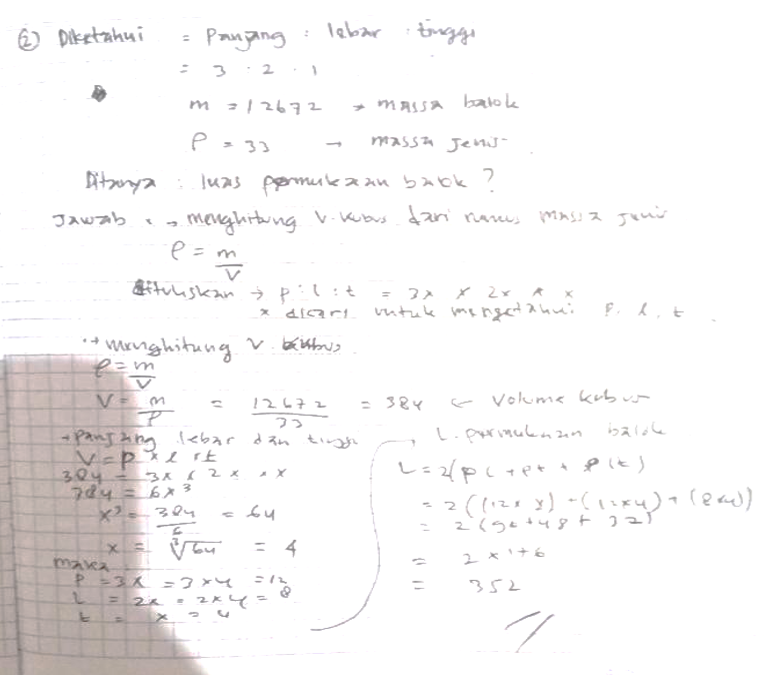
Mathematical connection skills are essential for solving Higher-Order Thinking Skills (HOTS) problem, yet Indonesian students struggle to link concepts across contexts. This study investigates how junior high school students apply these skilss in flat-sided space geometry, addressing gaps in contextual and interdisciplinary problem solving. A descriptive qualitative approach was employed with 18 Class VIII students at MTs Daarun Nahdhah Bangkinang. Data were collected through a validated essay text (expert judgment: k=0.82) measuring three indicators: (1) inter-mathematical concept connection, (2) mathematics to other fields applications, and (3) real world problem solving. Responses were scored using a rubric (0-4 scale) and analyzed thematically by ability level(high/medium/low). Only 28% of students excelled in connecting mathematical concept (indicator 1), while 22% performed well in interdisciplinary applications (indocator 2). Real world problem solving (indicator 3) showed the lowest mastery (11%). High ability students demonstrated coherent relational understanding, whereas medium/low ability students relied on rote memorization or made calculation error. The finding highlight critical gaps in students ability to contextualize mathematics, emphasizing the need for scaffolding in curriculum design. Implications suggest integrating real world examples and interdisciplinary tasks to strengthen HOTS based connection.
Downloads
References
Abosalem, Yousef. 2016. "Assessment techniques and students' higher-order thinking skills." International Journal of Secondary Education 4 (1): 1-11. DOI:10.11648/j.ijsedu.20160401.11
Angelina, Mardotillah, and Kiki Nia Sania Effendi. 2021. "Analysis of Mathematical Connection Ability of Junior High School Students in Grade IX." JPMI (Journal of Innovative Mathematics Learning) 4 (2): 383-94. https://doi.org/10.22460/jpmi.v4i2.p%25p
Anita, Ika Wahyu. 2014. "The effect of mathematics anxiety on mathematical connection ability of junior high school students." Infinity Journal 3 (1): 125-32. DOI:10.22460/infinity.v3i1.43
Aspuri, Aspuri. 2019. "Mathematical connection ability of junior high school students in solving story problems: A Case Study at SMP Negeri 3 Cibadak." JIPM (Scientific Journal of Mathematics Education) 7 (2): 124-31. DOI:10.25273/jipm.v7i2.3651
Elisahaya, Elisahaya, & Adi Ihsan Imami. 20 0. "Analysis of Mathematical Connection Ability on Quadrilateral Material." Proceedings of Sesiomadika 2 (1a). https://journal.unsika.ac.id/index.php/sesiomadika/article/view/2373
Hadin, Hadin, Helmy Muhammad Pauji, & Usman Aripin. 2018. "Analysis of Mathematical Connection Ability of MTS Students in View of Self Regulated Learning." JPMI (Journal of Innovative Mathematics Learning) 1 (4): 657-66.
Husna, Shely Anisa, & Sukoriyanto Sukoriyanto. 2024. "Analysis of Mathematical Connection Ability of MA Learners in Solving Contextual Problems on Linear Program Material." Journal of Mathematics Education Works 11 (1): 1-17. https://doi.org/10.26714/jkpm.11.1.2024.1-17
Isnaeni, Sarah, Aditia Ansori, Padillah Akbar, & Martin Bernard. 2019. "Analysis of junior high school students' mathematical connection ability on the material of linear equations and inequalities of one variable." Journal on Education 1 (2): 309-16.
Junaidi, J., Yenita Roza, & M. Maimunah. 2020. "Students' Thinking Ability in Solving HOTs Problem on Number Patterns and Rows." Journal of Research and Assessment of Educational Sciences: e- Saintika 4 (2): 173-82. DOI:10.36312/e-saintika.v4i2.220
Ministry of Education & Culture. 2013. Regulation of the Minister of Education and Culture of the Republic of Indonesia No. 70 of 2013 on the Basic Framework and Curriculum Structure of Vocational High School/Vocational Aliyah Madrasah. Jakarta: Ministry of Education and Culture.
Nari, Nola, & Anton Putra Musfika. 2017. "Analysis of learning difficulties in terms of students' mathematical connection skills." PROCEEDING IAIN Batusangkar 1 (2): 311-20.
Ningrum, Herlina Ulfa, Mulyono Mulyono, Isnarto Isnarto, & Wardono Wardono. 2019. "The Importance of Mathematical Connections & Self-Efficacy in High School Mathematics Learning." In PRISMA, Proceedings of the National Seminar on Mathematics, 2:679-86.
Nurafni, Atika, & Heni Pujiastuti. 2019. "Analysis of Mathematical Connection Skills in terms of Student Self Confidence: A Case Study at SMKN 4 Pandeglang." ANARGYA: Scientific Journal of Mathematics Education 2 (1): 27-33. DOI: https://doi.org/10.24176/anargya.v2i1.3013
OECD. 2019. PISA results 2018: combined executive summaries.
Retnawati, Heri. 2019. "Student mathematical connection ability in representing multiplication at the elementary school." In Journal of Physics: Conference Series, 1254:012080. IOP Publishing. DOI:10.1088/1742-6596/1254/1/012080
Risdayati, Anisa Hilmia, Erdawati Nurdin, & Annisah Kurniati. 2022. "STUDENTS' MATHEMATICAL CONNECTION ABILITY IN TERMS OF SELF-CONFIDENCE." Journal of Principles of Mathematics Education 4 (2): 1-8. DOI: https://doi.org/10.33578/prinsip.v4i2.106
Sholekah, Laili Ma'atus, & Adi Waluyo. 2017. "Analysis of students' difficulties in solving math problems in terms of mathematical connections in limit function material." AKADEMIKA DISCOURSE: Educational Scientific Magazine 1 (2).
Suhandri, Suhandri, Hayatun Nufus, & Erdawati Nurdin. 2017. "Profile of Students' Mathematical Connection Ability in Solving Mathematics Problems Based on Academic Ability Level." Journal of Analysis 3 (2): 115-29. DOI:10.15575/ja.v3i2.2012
Tata, T., & Haerudin, H. (2022). Analisis Kemampuan Pemahaman Konsep Matematika Siswa SMP Kelas IX pada Materi Aljabar. PRISMA, 11(2), 363–370. https://doi.org/10.35194/jp.v11i2.2385
Zainudin, M., & Anita Dewi Utami. 2021. "Analysis of students' difficulties in solving chance problems in terms of mathematical connections." Suska Journal of Mathematics Education 7 (1): 41-48. DOI:10.24014/sjme.v7i1.12382
Copyright (c) 2025 Desmira Maharani, Kartini Kartini, Yenita Roza

This work is licensed under a Creative Commons Attribution-NonCommercial-ShareAlike 4.0 International License.
License and Copyright Agreement
By submitting a manuscript to Jurnal Pendidikan Matematika (JUPITEK), the author(s) certify and agree to the following terms:
- Originality and Authority: The submitting author is authorized by all co-authors to enter into this agreement. The manuscript describes original work that has not been published previously in a peer-reviewed journal, nor is it under consideration for publication elsewhere.
- Approval: Its publication has been approved by all author(s) and by the responsible authorities of the institutions where the work was carried out.
- Rights: The authors secure the right to reproduce any material that has already been published or copyrighted elsewhere.
- Licensing and Copyright: Authors retain the copyright to their work.
- License Grant: The authors grant Jurnal Pendidikan Matematika (JUPITEK) the right of first publication, with the work simultaneously licensed under the Creative Commons Attribution-NonCommercial-ShareAlike 4.0 International (CC BY-NC-SA 4.0).
- Self-Archiving: Authors are permitted and encouraged to deposit the published version of their article in institutional repositories, on their personal websites, and other academic platforms, with proper acknowledgment of its initial publication in Jurnal Pendidikan Matematika (JUPITEK).



.png)