Development of Ethnomathematics-Based E-LKPD on Solid Geometry
Abstract
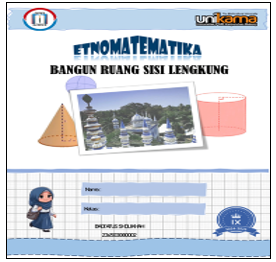
In the Society 5.0 era, the world of education demands that teachers possess 21st-century skills, including the ability to use technology and deliver material effectively. However, the use of technology-assisted learning media in schools remains limited, and students often face difficulties in understanding the concept of curved-sided three-dimensional shapes. This study aims to develop an ethnomathematics-based E-LKPD to aid students’ understanding of these concepts by integrating culture and technology. The ADDIE model was used for development, with validity, practicality, and effectiveness data measured. Validity data were obtained through expert validation, while practicality and effectiveness data were collected through a pilot test at SMP Al-Rifaie, Malang. The validation rate for subject-matter experts was 92.1% and the validation rate for media experts was 88.3% (Highly Valid), a practicality score of 84% (limited pilot test) and 85.8% (wider pilot test), and effectiveness with a classical mastery rate of 81.2% and a binomial test result (sig. 0.000). These results indicate that ethnomathematics-based E-LKPD is effective in improving students’ understanding of curved-sided three-dimensional shapes, as well as increasing student engagement and enthusiasm within the cultural context of the Tiban Mosque.
Downloads
References
Agustin, S. E., Yuhana, Y., & Alamsyah, T. P. (2023). Development of Pear Deck-Based Google Slides E-LKPD for Fifth-Grade Elementary School Mathematics Instruction. Jurnal Ilmiah Profesi Pendidikan, 8 (4), 2614–2620. https://doi.org/10.29303/jipp.v8i4.1832
Astuti, Zulfah, Nurhaliza, Nursyahfira, Sari, R. W., Ningrum, S., & Saputra, M. (2023). Exploration of Ethnomathematics in the Manggelek Tobu Tradition in Kuok. Journal of Education Research, 4 (1), 125–133. https://doi.org/https://doi.org/10.37985/jer.v4i1.134
Astuti, Zulfah, & Rian, D. (2021). Development of Ethnomathematics-Based Student Worksheets (LKPD) on Flat-Sided Three-Dimensional Shapes for 8th Grade Students at SMP Negeri 11 Tapung. Jurnal Pendidikan Tambusai, 5 (3), 9222–9231. https://doi.org/10.31004/jptam.v5i3.2452
Aulia, D. U., & Herlina Usman. (2023). Analysis of Teachers’ and Students’ Needs Regarding the Development of Electronic Student Worksheet (E-LKPD) Teaching Materials for Science Based on LiveWorksheet Using the Problem-Based Learning Model. Journal of Education and Culture (JURDIKBUD), 3 (3), 156–165. https://doi.org/10.55606/jurdikbud.v3i3.2562
Baharuddin, M. R., Yanti, R., & Wafda, A. (2023). Analysis of an Ethnomathematics Study on the Langkanae Palace Building. JTMT: Journal of Mathematics Education. https://doi.org/https://doi.org/10.47435/jtmt.v4i1.1662
Berenjian, A., Seifan, M., Kipper, M. J., & Robertson, N. (2026). A pedagogical case study on enhancing laboratory proficiency through virtual mammalian cell culture laboratory. Education for Chemical Engineers, 54 (August 2025). https://doi.org/10.1016/j.ece.2025.10.004
Bunga, S. B. A., Firdaus, H. P. E., & Fatqurhohman, F. (2025). Development of Ethnomathematics-Based Worksheets on the Architecture of Pura Mandhara Giri Semeru Agung. Mandalika Mathematics and Education Journal, 7 (2), 691–704. https://doi.org/10.29303/jm.v7i2.9218
Dahlan, M., & Kurniasari, I. (2022). Identification of Misconceptions Among Junior High School Students on Curved-Surface Geometric Shapes Using the Three-Tier Test. MATHEdunesa, 11 (2), 499–512. https://doi.org/10.26740/mathedunesa.v11n2.p499-512
Deda, Y., N & Disnawati, H. (2024). Ethnomathematical Investigation of Traditional Games for Cultural Preservation in The Indonesia-Timor Leste Border Region. Journal of Honai Math, 7 (1), 19–36. https://doi.org/10.30862/jhm.v7i1.512
Douara, A., Enaanai, A., & Zaz, Y. (2026). Deep Q-Learning for Adaptive Learning Systems: Enhancing Personalization, Engagement, and Learning Outcomes. Lecture Notes in Networks and Systems, 1642 LNNS, 127–137. https://doi.org/10.1007/978-3-032-07915-2_11
Farida, L. A., Hariyani, S., & Fayeldi, T. (2021). Development of Mathematics Instructional Videos to Improve Students’ Cognitive Learning Outcomes. Sigma, 7 (1), 30. https://doi.org/10.36513/sigma.v7i1.1209
Fidiastuti, H. R., Lathifah, A. S., Amin, M., Utomo, Y., & Aldya, R. F. (2021). Improving Students’ Motivation and Learning Outcomes Through a Genetics E-Module. Jurnal Ilmiah Peuradeun, 9 (1), 189–200. https://doi.org/10.26811/peuradeun.v9i1.477
Firmania, D., Syofiana, M., Ristontowi, & Risnanosanti. (2024). Liveworksheet-Based E-LKPD on Algebraic Expressions for Mathematical Concept Understanding. PEKA Journal (Mathematics Education), 8 (1), 17–27. https://doi.org/10.37150/jp.v8i1.2537
Fitri, A. A., Zakiah, L., Izzah, A. N., Trianingsih, M., Sanjaya, N. A. A. S., & Ifadha, R. D. (2025). Generation Z and Cultural Identity in Indonesia: Is Globalization Eroding Local Cultural Diversity?10 (2), 478–492. https://doi.org/https://doi.org/10.23969/jp.v10i02.24766
Hariyani, S., Ahmad, N. J., & Marsitin, R. (2021). Mathematics Teaching Practicum for Junior High School in a Culture-Based Context. TUARA (The Universal Academic Research Journal), 3 (2), 77–86. www.ijere.com. https://izlik.org/JA37BW65FX
Hasanah, S. I., Hafsi, A. R., & Zayyadi, M. (2019). Development of Ethnomathematics-Based Student Worksheets to Build Students’ Conceptual Understanding. Journal of Mathematics and Science Education, 10 (2), 21. https://doi.org/10.26418/jpmipa.v10i2.29609
Herizal, H., Nuraina, N., Rohantizani, R., & Marhami, M. (2022). TPACK Profiles of Prospective Mathematics Teachers in Preparing for 21st-Century Learning. JISIP (Journal of Social Sciences and Education), 6 (1), 1847–1857. https://doi.org/10.58258/jisip.v6i1.2665
Insani, S. P., Darmiany, D., Nurmawanti, I., & Witono, A. H. (2023). Teacher Creativity in the 21st Century in Overcoming Student Boredom in Learning Mathematics. Journal of Classroom Action Research, 5 (3), 66–72. https://doi.org/https://doi.org/10.29303/jcar.v5i3.4796
Isnaniah, Firmanto, P., & Imamuddin, M. (2023). Development of Student Worksheets (LKPD) Based on Minangkabau Cultural Ethnomathematics on the Topics of Congruence and Similarity. Jurnal Cendekia: Journal of Mathematics Education, 7 (3), 2605–2619. https://doi.org/https://doi.org/10.31004/cendekia.v7i3.1959
Izah, S. J., & Malasari, P. N. (2021). An Ethnomathematics Study: Sunan Bonang Mosque in Geometry Instruction. CIRCLE: Journal of Mathematics Education, 1 (01), 44–58. https://doi.org/10.28918/circle.v1i1.3597
Jannah, J. M., & Arfinanti, N. (2025). Ethnomathematics in Jathilan Art: An Analysis of Geometric Elements and Movement Patterns. Proximal: Journal of Mathematics Research and Mathematics Education, 8 (4), 1254–1264. https://doi.org/https://doi.org/10.30605/proximal.v8i4.7446
Joly, L., Davies, M., Youness, G., & Buisine, S. (2026). Influence of organizational culture on sustainable mobility behaviors in higher education. International Journal of Sustainability in Higher Education, 27 (10), 195–215. https://doi.org/10.1108/IJSHE-02-2025-0084
Kholifahtus, Y. F., Agutiningsih, & Wardoyo, A. A. (2021). Development of electronic student worksheets (E-LKPD) based on higher-order thinking skills (HOTS). Edustream: Journal of Basic Education, 5 (2), 143–151. https://doi.org/https://doi.org/10.26740/eds.v5n2.p143-151
Kustandi, C., Farhan, M., Zianadezdha, A., Fitri, A. K., & L, N. A. (2021). The Use of Visual Media in Achieving Learning Objectives. Akademika, 10 (02), 291–299. https://doi.org/10.34005/akademika.v10i02.1402
Kwakye, I. N., Adom-Fynn, D., Tsatsu, J. A., Vondee, S. E., Opoku-Mensah, K., Bour, K. B., Antwi, A. O., & Kugbey, N. (2026). Experiential learning and the transformation of University of Environment and Sustainable Development (UESD) students from classrooms to communities. Discover Education, 5 (1), 1–20. https://doi.org/10.1007/s44217-026-01218-1
Leton, S. I., Lakapu, M., Dosinaeng, W. B. N., & Fitriani, N. (2025). Integrating local wisdoms for improving students’ mathematical literacy: The promising context in learning whole numbers. Infinity Journal, 14 (2), 369–392. https://doi.org/10.22460/infinity.v14i2.p369-392
Liesandra, S. O., & Nurafni. (2022). Development of E-LKPD in Mathematics Learning on Plane Geometry Based on Ethnomathematics. AKSIOMA: Journal of the Mathematics Education Study Program, 11 (3), 2498–2510. https://doi.org/https://doi.org/10.24127/ajpm.v11i3.5560
Luthfi, H., & Rakhmawati, F. (2022). Development of Ethnomathematics-Based Student Worksheets (LKPD) on Curved-Surface Shapes for Grade 9. Jurnal Cendekia: Journal of Mathematics Education, 7 (1), 98–109. https://doi.org/https://doi.org/10.31004/cendekia.v7i1.1877
Maden, A., Maden, S., & Önal, A. (2026). Secondary school students’ reading culture and its role in critical reading self-efficacy perceptions. BMC Psychology, 14 (1). https://doi.org/10.1186/s40359-026-04015-5
Manohar, R., Mallikarjunaiah, S., M. (2026). A Residual-Based Adaptive Finite Element Methode for Phase-Field Models of Dynamic Brittle Fracture. Computers and Mathematics with Applications, 224, 281-299. https://doi.org/10.1016/j.camwa.2026.10.026
Marasabessy, R., Hasanah, A., & Juandi, D. (2021). Constructing Curved-Sided Shapes and Related Problems in Mathematics Education. EQUALS: Scientific Journal of Mathematics Education, 4 (1), 1–20. https://doi.org/10.46918/equals.v4i1.874
Marsigit, Irfan, M., & Sukoco, H. (2026). Evaluation of pedagogical quality in ethnomathematics learning practices. Discover Education, 5 (1). https://doi.org/10.1007/s44217-025-01026-z
Master, A., & Meltzoff, A. N. (2016). Building bridges between psychological science and education: Cultural stereotypes, STEM, and equity. Prospects, 46 (2), 215–234. https://doi.org/10.1007/s11125-017-9391-z
Maulani, J., Kelana, J. B., & Jayadinata, A. K. (2022). Development of Liveworksheet-Assisted Worksheets to Improve Fourth-Grade Elementary School Students’ Understanding of Science Concepts. Journal of Education Profession (JPP), 1 (2), 106–123. https://doi.org/https://doi.org/10.22460/jpp.v1i2.11613
Maulida, A. Z., Faiza, M. N., & Zuliana, E. (2023). Exploration of the graphical ethnomathematics of Kudus Batik motifs in Central Java. Journal of Primary Education Review: Journal of Educational Studies and Research Findings, 9 (3), 198–204. https://doi.org/https://doi.org/10.26740/jrpd.v9n3.p198-204
Mustafa, S., Sari, V., Aflaha, Ahmad, J., & Hariyani, S. (2025). Cultural connections: How culturally responsive teaching transforms mathematical learning. Edelweiss Applied Science and Technology, 9 (5), 628–640. https://doi.org/10.55214/25768484.v9i5.6964
Nadania, I. N., Sumantri, S., & Zakiah, L. (2024). Development of the ‘TereDaman’ AR Interactive Multimedia Based on Problem-Based Learning in Elementary School Science Education. Jurnal Teknodik, 28, 41–50. https://doi.org/10.32550/teknodik.vi.1112
Ntumi, S., Adzifome, S. N., Nyamekye, T., & Vedor, F. K. (2026). Culturally responsive assessment in mathematical word problems and numerical cognition in multilingual education. Scientific Reports, 1–22. https://doi.org/10.1038/s41598-026-35864-0
Nurhikmah, S., Sandy, Ali, R. Z., & Ruswandi, U. (2023). Designing Islamic Education Instruction Using the ADDIE Model for the Topic of Belief in the Day of Judgment at SMA Plus Tebar Ilmu Ciparay. Al Qalam: Journal of Religious and Social Sciences, 17 (2), 1039–1052. https://doi.org/http://dx.doi.org/10.35931/aq.v17i2.1988
Palhares, P. (2025). The Contributions of Ubiratan D’ambrosio and Paulus Gerdes to the History and Epistemology of Mathematics. In Trends in the History of Science: Vol. Part F533 (pp. 65–77). https://doi.org/10.1007/978-3-031-86870-2_5
Pangestuti, U. T., Sulistyaningsih, D., & Purnomo, E. A. (2025). Development of CORE-Based E-LKPD Using the Ethnomathematics Approach for Relations and Functions Material for Eighth-Grade Students. Jurnal Ilmiah Profesi Pendidikan, 10 (2), 1002–1013. https://doi.org/10.29303/jipp.v10i2.3293
Pantsar, M. (2021). Objectivity in Mathematics, without Mathematical Objects. In Philosophia Mathematica (Vol. 29, Issue 3). https://doi.org/10.1093/philmat/nkab010
Payadnya, I. P. A. A., Wulandari, I. G. A. P. A., Puspadewi, K. R., & Saelee, S. (2024). The significance of ethnomathematics learning: a cross-cultural perspective between Indonesian and Thai educators. Journal for Multicultural Education, 18 (4), 508–522. https://doi.org/10.1108/JME-05-2024-0049
Prastika, Y. D. (2020). The influence of students’ interest in learning on the mathematics learning outcomes of students at SMK Yadika Bandar Lampung. Jurnal Ilmiah Matematika Realistik (JI-MR), 1 (2), 17–22. https://doi.org/https://doi.org/10.33365/ji-mr.v1i2.519
Puspitasari, R., & Putra, A. (2022). Systematic Literature Review: Exploring Ethnomathematics in Temple Architecture. Journal of Mathematics Learning Research, 4 , 13–18. https://doi.org/https://doi.org/10.55719/jrpm.v4i1.367
Putri, A. C. H., Sulistyaningsih, D., & Suprayitno, I. J. (2024). Design of Auditory, Intellectually, Repetition (AIR)-Based E-LKPD Using an Ethnomathematics Approach to Proportions. Postulat: Journal of Mathematics Education Innovation, 5 (2), 130–143. https://doi.org/10.30587/postulat.v5i2.8802
Rafiqoh, S. (2020). Trends and Issues in Mathematics Learning in Line with 21st-Century Learning to Face the Fourth Industrial Revolution. https://doi.org/https://doi.org/10.32696/JMN.V3I1.101
Rewatus, A., Leton, S. I., Fernandez, A. J., & Suciati, M. (2020). Development of Ethnomathematics-Based Student Worksheets on Triangles and Quadrilaterals. Jurnal Cendekia: Journal of Mathematics Education, 4 (2), 645–656. https://doi.org/10.31004/cendekia.v4i2.276
Ridho, M. A., Fajriah, N., & Juhairiah, J. (2024). Development of an Interactive STEM-Based E-LKPD on Flat-Sided Three-Dimensional Shapes with a Banjar Cultural Context. EDU-MAT: Journal of Mathematics Education, 12 (2), 287. https://doi.org/10.20527/edumat.v12i2.19078
Rofiq, I., & Rohman, M. G. (2024). Student worksheets based on ethnomathematics of traditional snacks on the topic of curved-sided three-dimensional shapes. Introduction: Education is a basic human need. Education helps people explore their potential to improve their standard of living. M. PYTHAGORAS: Journal of the Mathematics Education Study Program, 13(2), 135–145. https://doi.org/10.33373/pyth.v13i2.6383
Rosa, M., & Orey, D. (2011). Ethnomathematics: the cultural aspects of mathematics. Revista Latinoamericana de Etnomatemática, 4 (2), 32–54. http://www.revista.etnomatematica.org/index.php/RLE/article/view/32
Salsabila, V., Yudianto, E., Ambarwati, R., Setiawan, T. B., & Wihardjo, E. (2023). Development of Ethnomathematics-Based Student Worksheets at the Jamik Mosque in Sumenep. Journal of Mathematics Education and Science, 6 (1), 67–74. https://doi.org/10.32665/james.v6i1.1390
Samsulbassar, A., Suhartini, A., & Eq, N. A. (2020). Implications of the Concept of Fitrah in Islam and National Educational Goals. Indonesian Journal of Islamic Education, 5 (1), 49–56. https://doi.org/10.35316/jpii.v5i1.229
Santoso, R., S., B., Pratiwi, Y., Karkono, Puspitasari, N & Aini, L. (2027). Integrating Local Cultural Values into Deep Learning Pedagogy: A Framework for Teaching Science Fiction Writing in Indonesia. Multidisciplinary Science Journal, 9(3). https://doi.org/10.31893/multiscience.2027177
Setiana, D. S., & Nuryadi. (2022). Analysis of the Effectiveness of E-LKPD (Electronic Student Activity Sheets) Based on Batu Akik Ethnomathematics in Terms of Students’ Initial Abilities. Gantang Journal, 6 (2), 113–123. https://doi.org/10.31629/jg.v6i2.3566
Sopamena, P., Latuconsina, A., Kadir, E., Assagaf, G., & Sehuwaky, N. (2026). The Effectiveness of Student Worksheets Based on Integrated Mathematics Literacy of Maluku Culture Through Ethnomathematics in Improving the Quality of Learning. Malaysian Journal of Mathematical Sciences, 20 (1), 275–291. https://doi.org/10.47836/mjms.20.1.14
Sumanik, N. B., & Siregar, L. F. (2023). Training on Creating E-LKPDs Using Liveworksheets and Canva at SMPN 3 Merauke. Jubaedah: Journal of School Service and Education, 3 (1), 14–24. https://doi.org/https://doi.org/10.46306/jub.v3i1.112
Sumarsono, L. S. P., Shalihah, A., Ummah, S. R., & Hamidah, D. (2022). 3902-Article Text-13946-2-10-20220522. MARISEKOLA: Journal of Mathematics Research, Education, and Collaboration, 3 (1), 65–70. https://doi.org/https://doi.org/10.53682/marisekola.v3i1.3902
Supriyono, Purwaningsih, W. I., & Saputra, A. F. (2021). Ethnomathematics in Javanese Gamelan Musical Instruments. Math Educa Journal, 5 (2), 135–142. https://doi.org/https://doi.org/10.15548/MEJ.V5I2.2763
Werang, B. R., Agung, A. A. G., & Wulandari, I. G. A. A. (2026). Asta Brata leadership practices and their impact on school culture and student character in Indonesia’s elementary schools. Discover Sustainability, 7 (1). https://doi.org/10.1007/s43621-025-02421-0
Werdiningsih, C. E. (2022). An Ethnomathematics Study of Traditional Food (Case Study on Lepet Ketan). 05 (02), 112–121. https://doi.org/https://doi.org/10.37150/jp.v5i2.1433
Wikaningtyas, C. R., Hayati, N., & Rahmasari, K. N. (2022). An Ethnomathematics Study on Geometric Aspects in the Design of the Larik Traditional House. PRISMA, Proceedings of the National Mathematics Seminar, 5 , 414–422. https://doi.org/https://journal.unnes.ac.id/sju/prisma/article/view/54548
Wowor, E. C., Tumewu, W. A., & Mokalu, Y. B. (2022). Reflection in Learning: Implementation of the Repetitive Method Through Reflection Activities. Soscied, 5 (2), 272–279. https://doi.org/https://doi.org/10.32531/jsoscied.v5i2.545
Yulianie, P., Anjani, M., Dotrimensi, & Triyani. (2025). Building National Identity Through Civic Education at Rehobot Christian Junior High School in Palangka Raya. SOCIAL: Journal of Social Studies Education Innovation, 5 (1), 105–117. https://doi.org/https://doi.org/https://doi.org/10.51878/social.v5i1.4626
Zhaara, T. A., Lutfi, N. A., & Kurniawan Agus Prasetya. (2024). A Comparison of Ethnomathematics at the Cheng Hoo Mosque in Purbalingga, the Cheng Hoo Mosque in Jember, and the Cheng Hoo Mosque in Surabaya. Journal of Mathematics Education Research and Teaching, 1 (1), 33–43. https://doi.org/10.37058/jp3m.v10i1.9500
Zito, G., & Albanese, V. (2025). Juggling Balls and Mathematics: An Ethnomathematical Exploration. Education Sciences, 15 (3), 1–20. https://doi.org/10.3390/educsci15030387
Copyright (c) 2026 Badi’atus Sholikhah, I Ketut Suastika, Sri Hariyani

This work is licensed under a Creative Commons Attribution-NonCommercial-ShareAlike 4.0 International License.
License and Copyright Agreement
By submitting a manuscript to Jurnal Pendidikan Matematika (JUPITEK), the author(s) certify and agree to the following terms:
- Originality and Authority: The submitting author is authorized by all co-authors to enter into this agreement. The manuscript describes original work that has not been published previously in a peer-reviewed journal, nor is it under consideration for publication elsewhere.
- Approval: Its publication has been approved by all author(s) and by the responsible authorities of the institutions where the work was carried out.
- Rights: The authors secure the right to reproduce any material that has already been published or copyrighted elsewhere.
- Licensing and Copyright: Authors retain the copyright to their work.
- License Grant: The authors grant Jurnal Pendidikan Matematika (JUPITEK) the right of first publication, with the work simultaneously licensed under the Creative Commons Attribution-NonCommercial-ShareAlike 4.0 International (CC BY-NC-SA 4.0).
- Self-Archiving: Authors are permitted and encouraged to deposit the published version of their article in institutional repositories, on their personal websites, and other academic platforms, with proper acknowledgment of its initial publication in Jurnal Pendidikan Matematika (JUPITEK).